Friday, April 26, 2013

Beans Bourguignon

In the world of vegan eats, Beef Bourguignon becomes "Beans Bourguignon" (page 253), a remarkable transformation in my opinion. Originating in Burgundy, France (the word bourguignon means "as prepared in Burgundy"), this delicious stew always includes red wine (of course) and usually mushrooms, as well as other vegetables and seasonings. This particular recipe uses shallots, mushrooms, carrots, and tomatoes, with dark red kidney beans taking the place of beef. Deliciously seasoned with garlic, bay leaf, and thyme, this is a dish of simple ingredients that meld together for taste perfection. Initially I was stumped on how to work around the step calling for adding kneaded little balls of margarine and flour to the simmering pot, which seems to be a fancy way of thickening the stew. My solution was to shake ¼ cup water and 2 tablespoons of flour in a jar until very smooth, and add that to the simmering pot instead. Great results! The stew thickened, and with no added fat. Serve this with crusty French bread to dip into the delicious broth. Bon appétit!
 
"Keeping it McDougall Friendly" checklist:
ü  Omit the oil when sautéing the veggies, and use a bit of sherry, water, or broth instead, and/or a nonstick soup pot.
ü  Instead of making the "kneaded butter", put ¼ cup water and 2 tablespoons flour in a jar with a lid, and shake vigorously until all the lumps are gone. Add this slowly to the simmering pot, and stir until the stew is thickened.


Sunday, April 21, 2013

Spicy Sesame Noodles with Green Beans

"Spicy Sesame Noodles with Green Beans" (page 240) is simply delicious! Although technically this dish can go together rather quickly (it is in the "Fast Recipes" category of this book, meaning the dish can be prepared in 30 minutes or less), it can also be somewhat labor - and pots and pans - intensive. It calls for green beans, which you might have to trim, cut, and steam (1st pot); there is the pasta to boil (2nd pot); there are the veggies to dice and stir fry (3rd pot/skillet). That being said, this dish is well worth the effort, I'm just not sure I would call it fast. But then again, I'm not a speedy cook. I rather enjoy lingering over meal preparation when I have the luxury to do so. The flavorful sauce for this dish is comprised of tahini, sugar, red wine vinegar, red pepper flakes, and soy sauce, which is tossed together with the cooked noodles and sautéed veggies (red bell pepper, garlic and ginger). Here again Robin incorporates the "rule of three" theme, this time with sesame: Tahini in the dressing, sesame oil for sautéing, and sesame seeds sprinkled on top of the finished pasta toss. I opted to leave out the sesame oil, but as little as ½ teaspoon would impart a richer sesame flavor if you so desired, with a lot less fat than the 2 tablespoons the recipe calls for.
 
 "Keeping it McDougall Friendly" checklist:
ü  Omit the oil when sautéing the veggies, and use a bit of sherry, water, or broth instead, and/or a nonstick skillet.
ü  Use whole grain noodles, such as the Eden brand 100% whole grain udon - I highly recommend this pasta.

Wednesday, April 17, 2013

Smokey Chipotle-Pinto Hummus

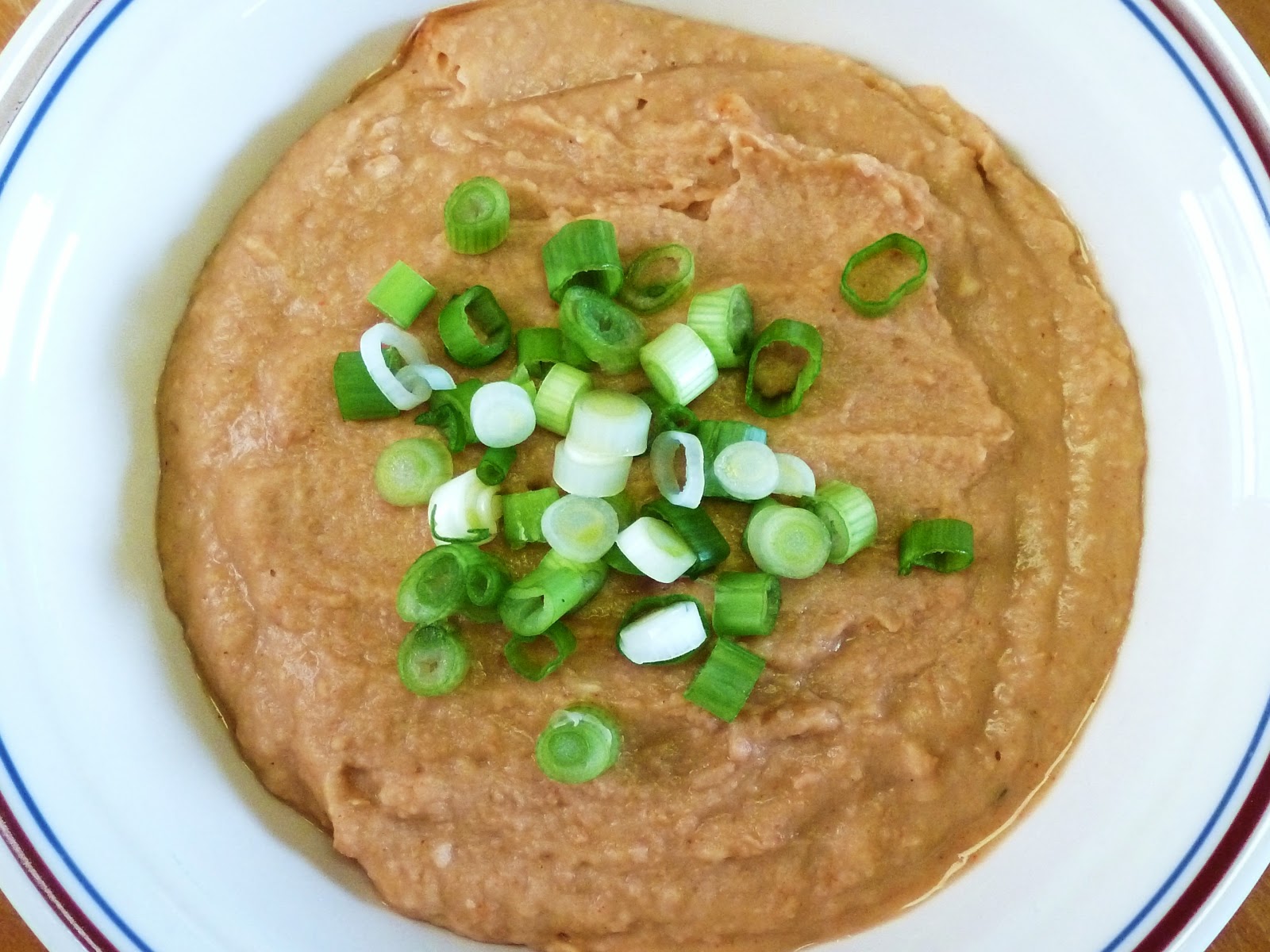
Not so long ago, many of us didn't even know how to pronounce "hummus", let alone realize it was something good to eat, and not humus, the remains of decomposing leaves. I remember the first time I tried hummus at my local food co-op, and to help all us newbies figure out how to say it, the menu board listed it thusly: "Hummus (a tune)". It worked! I never forgot how to say the word, and I've had an ongoing love affair with this wonderful food ever since. Technically, hummus is a Middle Eastern paste or dip of mashed chickpeas, tahini, oil, lemon juice, and garlic. But in today's hummus crazed world, this is a loose definition, and just about any bean mixed with a variety of seasonings makes a good stand in for the traditional blend. Such is the case with the "Smoky Chipotle-Pinto Hummus" (page 11), and might I say, this particular combination of garlic, pinto beans, chipotle, and lime is astounding! With flavors inspired from traditional Mexican cuisine, this hummus is delicious with baked tortillas chips, as a burrito filling, or in large enough quantities, a substitute for refried beans. Since I've discovered powdered chipotle chili powder, I've found I don't always have to crack open an entire can of chipotles chiles in adobo sauce for one chili, and then try to figure out what to do with the rest. Here I used about ½ teaspoon of chipotle chili powder instead and it came out fantastic. The really great news about this recipe is there are no changes necessary to keep it McDougall Friendly!
 
"Keeping it McDougall Friendly" checklist:
ü     No changes necessary! J

Saturday, April 13, 2013

Red Bean Burritos

If you have cooked rice on hand, these "Red Bean Burritos" (page 128) can be put together in no time at all for a quick meal any time of day. This is an uncomplicated mix of sautéed onion and bell pepper, mixed with beans and rice, topped off with avocado and salsa, and wrapped into a warmed tortilla. Many of the recipes in this book incorporate a theme into the ingredients list. It might be color; it might be using a single food in more than one way (such as incorporating sesame seeds, sesame oil, and sesame tahini in the same dish). In this recipe, red is the theme with the inclusion of red bell peppers, red kidney beans, and red tomato salsa. (If you wanted to build on this, you could even use a red onion as well.) I opted to use corn tortillas instead of flour since I wasn't able to find any healthy flour tortillas at the time I made this dish, so my picture is a shot of what the mix looks like before scooping it up with pieces of warmed corn tortillas.
 
"Keeping it McDougall Friendly" checklist:
ü  Omit the olive oil when sautéing the onion and bell pepper. Use a nonstick skillet instead, and/or substitute water or broth for the oil.
ü  Opt for brown rice instead of white.
ü  Use oil free whole grain flour tortillas, or if unavailable, use corn tortillas.

Monday, April 8, 2013

Golden Couscous Salad

For pasta salads using couscous, I prefer to use the giant sized variety known as Israeli couscous, and that is what I did when making the "Golden Couscous Salad" (page 86). This did require me to change up the recipe directions somewhat because when I cook Israeli couscous, I boil and drain it like other pastas, rather than letting all the cooking liquid soak in like you do with rice. For that reason, I added the turmeric to the boiling water in order to impart the golden color onto the couscous. There are many shades of golden in this salad, including the turmeric, yellow bell pepper, carrot, apricots, and golden raisins. Even the chickpeas are a bit golden. This salad is just bursting with color and flavor. I did have to improvise on the dressing ingredients, because as written, the recipe calls for ¼ cup olive oil. Instead of that, I combined 2 tablespoons each of sherry, light veggie broth, and lemon juice. Fantastic! This salad holds up well in the refrigerator, so we were able to enjoy it several times over 3-4 days.
 
"Keeping it McDougall Friendly" checklist:
ü Substitute 2 tablespoons each of sherry, light veggie broth, and lemon juice for the ¼ cup olive oil.
ü If you can find it, use the whole wheat variety of couscous. I've seen this in the small cut variety, but so far, not in the Israeli variety.

Thursday, April 4, 2013

Stir-Fried Sesame Asparagus

I love asparagus however it is prepared: steamed, roasted, puréed into soup, chilled in a salad, and now in this dish, "Stir-Fried Sesame Asparagus" (page 356). The sesame in this recipe comes from both sesame seeds, and sesame oil, but I opted to leave the oil out. The asparagus is lightly stir-fried and seasoned with garlic, ginger, and soy sauce, which gives this quick side dish a definite Asian persuasion. The sesame seeds are added at the very end.
 
"Keeping it McDougall Friendly" checklist:
ü   Instead of stir-frying the asparagus in canola oil, use an equal amount of sherry, which is very complementary in this dish.
ü  Omit the sesame oil, or use just a couple of drops if you want to intensify the sesame flavor.

Sunday, March 31, 2013

Roasted Brussels Sprouts

Fans of Brussels sprouts will really appreciate the "Roasted Brussels Sprouts" (page 359), and it may even convert non-fans. I have always been a fan, though, and enjoy finding new ways to cook them. Preparation is quick and easy. After briefly steaming the halved sprouts, simply moisten, season, and bake in a hot oven until tender. The recipe calls for olive oil, but I used broth instead, and the end result was fantastic.
 
"Keeping it McDougall Friendly" checklist:
ü     Substitute flavorful veggie broth for the olive oil.

Sunday, March 24, 2013

Garden Salad Wraps

If you are fond of veggie wraps, the "Garden Salad Wraps" (page 112) will be sure to please. The veggies consist of lettuce, tomatoes, cucumbers, carrots, onions, and green olives. Sautéed tofu, seasoned with soy sauce, adds chew and substance, making these wraps ideal for a light lunch. The biggest hurdle was working around the 6 tablespoons of olive oil the recipe calls for (716 calories, and 81 grams of fat). Two of the tablespoons are used to sauté the tofu, but this isn't necessary if you use a non-stick skillet. The remaining 4 tablespoons are part of the dressing, along with vinegar, mustard, salt & pepper. Because the veggies themselves contained a lot of moisture, I found I really didn't need to come up with a substitute for the oil, and I just left it out completely. These wraps were quick to assemble, and even quicker to eat! J
 
"Keeping it McDougall Friendly" checklist:
ü     Use whole grain oil free wraps.
ü     Omit the olive oil when sautéing the tofu and preparing the dressing, as described above.

Thursday, March 21, 2013

California Pasta Salad

The "California Pasta Salad" (page 91) is inspired by three California crops - avocados, walnuts, and Meyer lemons. If you aren't familiar with the Meyer lemon, this variety is somewhat milder and sweeter than most, and is favored for those times when you want all the lemony goodness but not so much of the tart. When I made this salad, we were staying in the Rio Grande Valley in deep South Texas, where the Meyer lemon is known as the Valley lemon. I don't know for sure if these are the same variety or not, but the Valley lemon is very sweet and mild, like the Meyer, so it worked perfectly well in this recipe. The recipe calls for penne pasta, which I like for the nice chewy texture. The other veggies include red bell pepper, carrot, green onions, and kalamata olives. The lemon juice is part of the dressing, which also calls for 1/3 cup olive oil. In case you're interested, 1/3 cup of olive oil packs a walloping 71 grams of fat and 630 calories. Even divided among 4 servings, that is a lot of fat and calories, especially when you take into consideration this salad also contains olives, walnuts, and avocados. The way I got around the olive oil was to add a cup of chopped fresh tomatoes instead. This not only provided moisture for the salad, it also added color and flavor, without an iota of fat. Fresh basil is added at the very last, a delicious touch. This is a fantastic salad, but one to reserve for special occasions if you are going easy on the high fat plant foods.
 
"Keeping it McDougall Friendly" checklist:
ü  Use whole grain penne pasta, or some other variety of whole grain pasta if penne isn't available.
ü  Omit the olive oil and use fresh chopped tomatoes instead as dressing, along with the lemon juice.

Tuesday, March 12, 2013

Garden Vegetable Stew

The one rule for the "Garden Vegetable Stew" (page 324) states that the vegetables be garden-fresh, from your own garden, a friend's, or from a Farmer's Market. I admit, not everything in my rendition followed this rule, but I did my best and used all the fresh produce I could find. This is a scrumptious stew, just bursting with color and flavor. The vegetables included onion, carrot, potatoes, bell pepper, zucchini, summer squash, tomatoes, corn, and peas. Lightly seasoned, and cooked in veggie broth, this stew would be delightful year round, using whatever is freshly harvested.
 
"Keeping it McDougall Friendly" checklist:
ü Omit the olive oil when sautéing the veggies. Instead, use a non-stick skillet and/or a little water, broth, or sherry as the sauté liquid.

Friday, March 8, 2013

Asparagus Edamame Bisque

Any time I see the word bisque in a soup recipe, I know it will be creamy, delicious, and elegant, as is the "Asparagus Edamame Bisque" on page 167. This very simple puréed soup consists of sautéed and simmered leeks, shallots, edamame, and asparagus, and is very quick to put together. Seasoned with just a hint of cayenne for subtle warmth, and garnished with black sesame seeds, parsley, or asparagus tips, you have a delightful starter dish for a more elaborate meal, or a great soup that stands on its own for lighter fare.
 
"Keeping it McDougall Friendly" checklist:
ü  Omit the olive oil when sautéing the veggies. Instead, use a non-stick skillet and/or a little water, broth, or sherry as the sauté liquid.

Sunday, March 3, 2013

Chickpea & Vegetable Curry

My husband just isn't a curry fan. I've tried many ways to sneak a curry by him, but even when I change the name of a recipe, thinking he won't notice if I don't tell him, he figures it out. He'll walk into the kitchen and say, "Is that cumin I smell?", or, "How much turmeric did you put in that?", before he's ever tried a bite.  But in the spirit of never giving up, I did prepare the "Chickpea & Vegetable Curry" (page 258), hoping this would be the curry dish that would steal his heart. Although he still wasn't wooed over, he did say "its not so bad". Hey, this is progress! Baby steps, but progress! However, I enjoyed this dish very much. It is bursting with vegetables, like onion, carrot, potato, and peas, seasoned with garlic, ginger, and the usual array of curry spices (cumin, coriander, ginger, curry powder). Raisins and coconut milk lend a sweetness that counterbalances the heat and spice. This is everything a wonderful curry dish should be! I prefer not to use coconut milk because of the high saturated fat content, so instead I used rice milk flavored with coconut extract. This worked out very well.
 
"Keeping it McDougall Friendly" checklist:
ü  Omit the olive oil when cooking the veggies. Instead, use a non-stick skillet and/or a little water, broth, or sherry as the sauté liquid.
ü  Substitute an equal amount of soy or rice milk flavored with ½ teaspoon of coconut extract for the 13.5 ounces of coconut milk.

Thursday, February 28, 2013

Zucchini Sauté with Sun-Dried Tomatoes, Olives, & Peppers

"Zucchini Sauté with Sun-Dried Tomatoes, Olives, & Peppers" (page 384) is a Mediterranean style vegetable side dish that you can toss together quickly any time you have the ingredients on hand: zucchini, garlic, sun-dried tomatoes, kalamata olives, parsley, lemon juice, and…wait...what about the peppers? Funny thing is the ingredients list doesn't include peppers of any kind. But I cleared that up with a quick email to Robin Robertson, who explained that at the last minute when testing the recipe she added red peppers and thought they were so good, she would include them, but the update didn't make it to the final cut. To correct this omission, Robin said: "The addition should be “1 red bell pepper, cut into strips” and they get added when you add the zucchini." Easy enough! Even without any peppers (as I prepared it), this is a great way to prepare zucchini.
 
"Keeping it McDougall Friendly" checklist:
ü  Omit the olive oil when cooking the veggies. Instead, use a non-stick skillet and/or a little water, broth, or sherry as the sauté liquid.
ü  If using oil-packed sun-dried tomatoes, rinse them off and blot dry before using them in the recipe. Alternately, buy the variety that comes in cellophane packages and rehydrate with water before using.

Thursday, February 21, 2013

Granola

I never realized how much better homemade granola is than anything you can buy in a store! This "Granola" recipe (page 521) is one I have made repeatedly, and consider it one of the shining stars of this book. Surprisingly (and happily!) the recipe as written contains no added oils, which is somewhat hard to come by in store bought varieties. The base ingredients are oats, almonds, sunflower seeds, raisins, coconut, maple syrup, cinnamon, and allspice. But this is just a start, as there are endless variations to try. Any rolled whole grain could fill in for the oats; walnuts or pecans can sub for the almonds; leave out the coconut if you're not a fan; used other dried fruits instead of raisins. No matter the combination, the end result is sure to please. I found I had to make a couple of adjustments to the instructions to make it work for me. First of all, I don't have a pan (nor an oven) big enough to accommodate the full recipe (which starts with 5 ½ cups of oats), so I always cut the recipe in half. I also found that 300 degrees isn't hot enough in my oven, so I have been roasting the granola closer to 325-350 degrees. I also found that the suggested roasting time (10 minutes initially with part of the ingredients, then another 15 with everything in the pan) isn't long enough to yield a crisp and dry granola. I've been adding another full 30 minutes, taking the pan out of the oven every 15 minutes and stirring, to get a crispy, golden and dry end product. One other hint: If you want to keep the dried fruit soft and chewy, add it after the granola comes out of the oven for the last time.
 
"Keeping it McDougall Friendly" checklist:
ü     Omit the coconut to avoid saturated fats.